ChatGPT:
🌦️ Weather Forecasting Today: Why Humans, Physics, and AI All Matter
Modern weather forecasts may look simple on your phone, but behind them lies one of the most complex prediction problems humans have ever tackled. To understand why forecasts have improved so much — and why meteorologists still consult many models — we need to look at two very different forecasting philosophies: traditional computer (physics-based) models and newer AI-based methods.
⸻
1. What traditional computer forecast models actually do
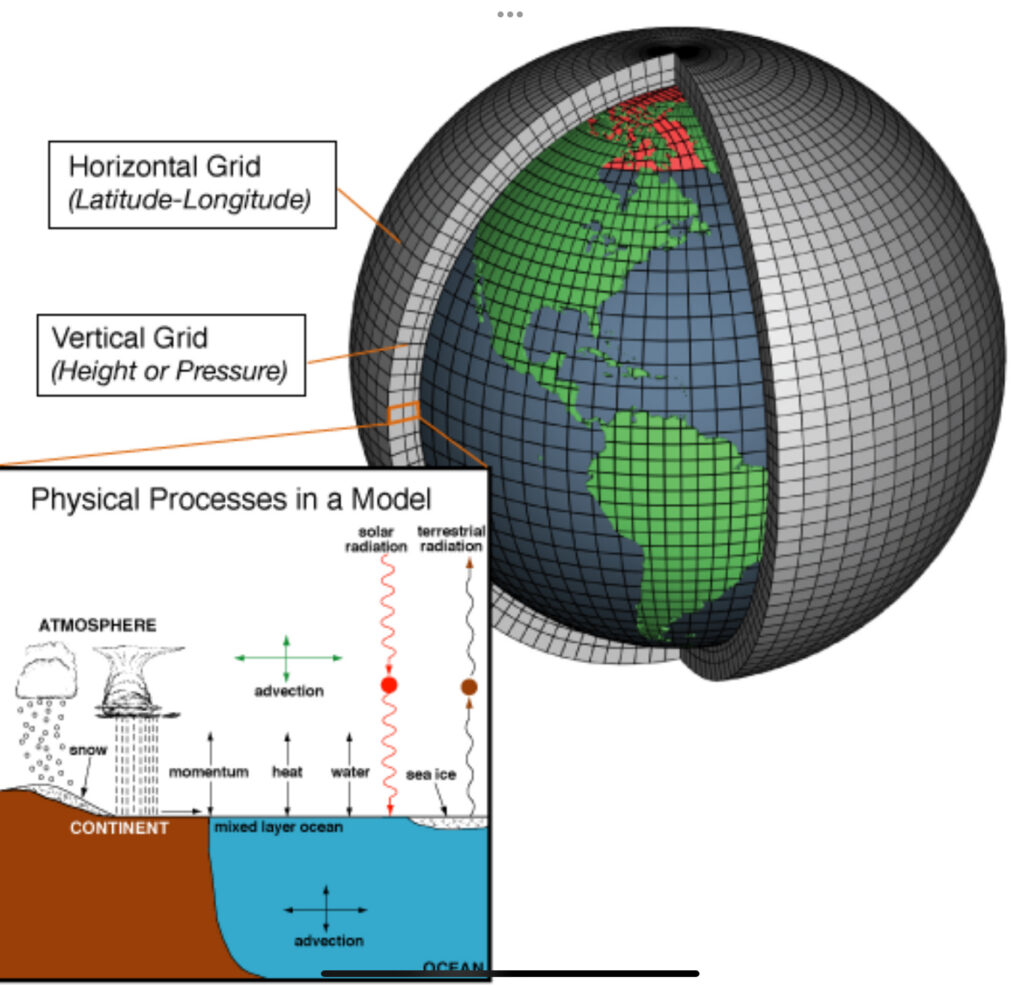
• Physics-based weather models (often called numerical weather prediction models) attempt to simulate the atmosphere directly.
• They divide the Earth’s atmosphere into millions of 3-D grid boxes and calculate:
• Air movement
• Temperature changes
• Moisture, clouds, and radiation
• These calculations rely on well-known physical laws: fluid dynamics, thermodynamics, and energy balance.
• The model steps forward in time, minute by minute, computing what should happen next.
Strengths
• Firmly grounded in physical laws
• Transparent: scientists know which equations are being solved
• Can handle situations never seen before (new climates, unusual extremes)
Limits
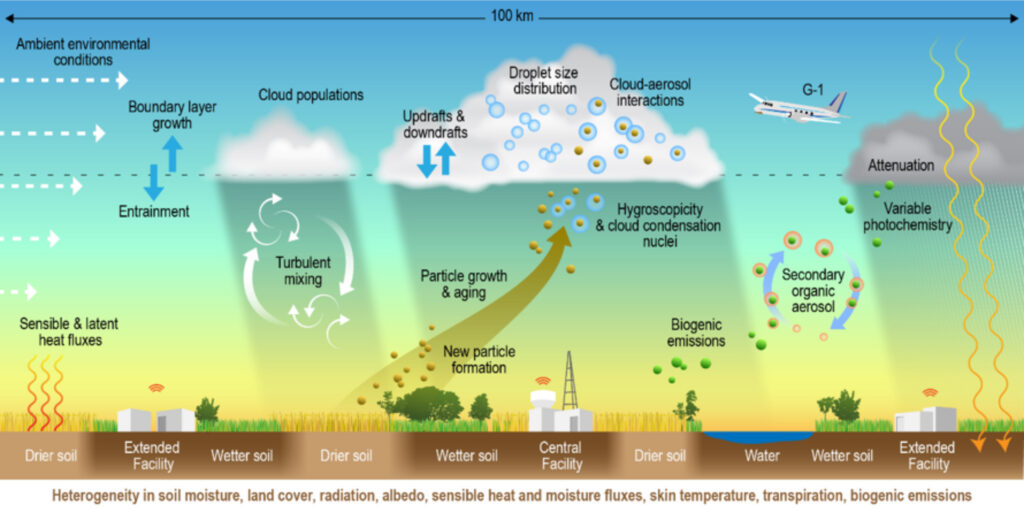
• The atmosphere is chaotic: tiny errors in starting conditions grow rapidly
• Many crucial processes (clouds, turbulence) must be approximated
• Higher resolution means exponentially more computing power
• Even small biases can compound over days
👉 Result: physics models are powerful but never perfect.
⸻
2. Why meteorologists must consult many different models
Meteorologists often check five, ten, or even more models, not because they are uncertain, but because uncertainty is unavoidable.
• No model starts with perfect data
• Observations are incomplete and noisy
• Different models make different compromises
• Resolution
• Cloud treatment
• Ocean-atmosphere coupling
• Some models are better for certain situations
• Heat waves
• Winter storms
• Tropical systems
• Local fog or thunderstorms
Instead of asking:
“Which model is right?”
Meteorologists ask:
“What range of futures is plausible?”
This multi-model approach:
• Reveals agreement (higher confidence)
• Exposes divergence (greater uncertainty)
• Helps identify outliers that may signal risk
⸻
3. Ensemble forecasting: thinking in probabilities, not certainties
• Modern forecasting is probabilistic, not deterministic.
• Each model (or each run of a model) represents one possible future.
• Meteorologists examine:
• How tightly forecasts cluster
• How widely they spread
• Whether there are multiple competing outcomes
This is why forecasts often say:
• “High chance of rain”
• “Uncertainty increases after day five”
• “Small shifts could change impacts”
👉 Disagreement between models is not failure — it is information.
4. What AI weather models do differently
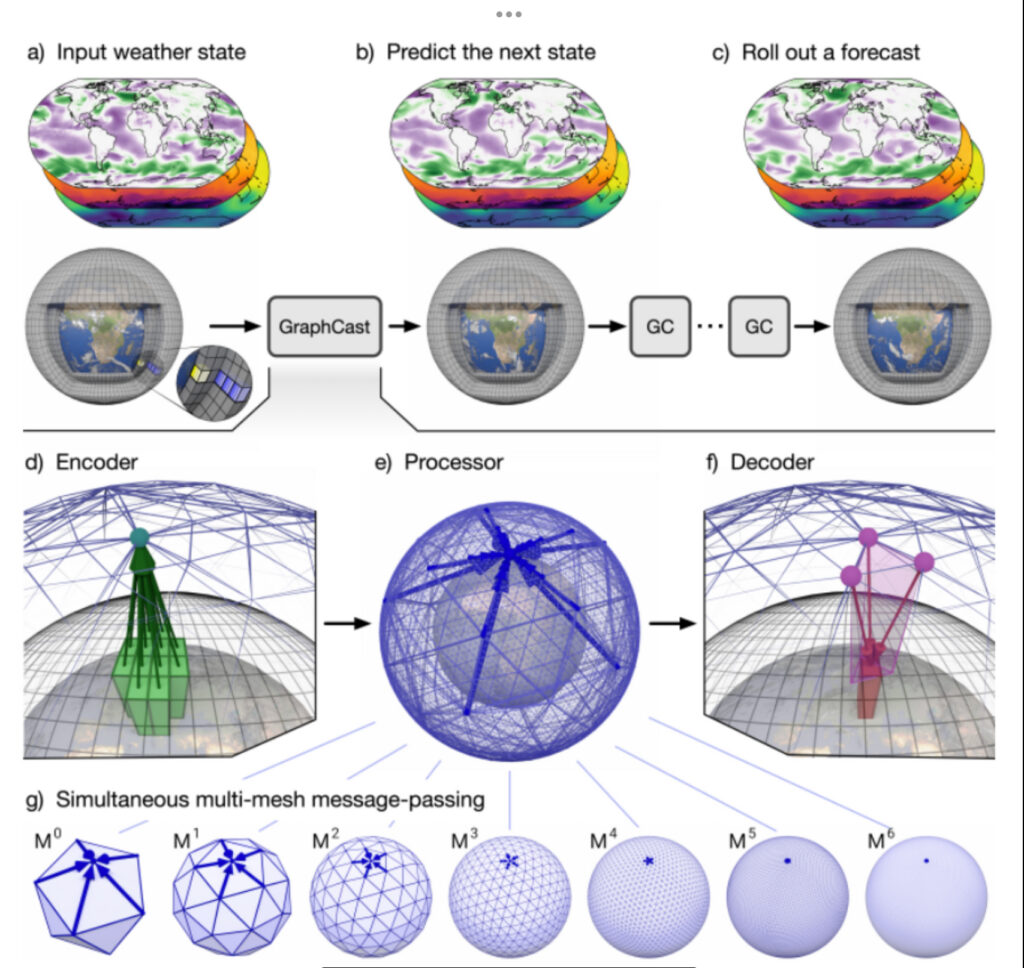
AI-based weather models take a fundamentally different approach.
- Instead of solving physical equations step by step, AI models:
- Learn from decades of historical weather data
- Learn how atmospheric states usually evolve
- Detect patterns across many variables at once
In simple terms:
- Physics models try to calculate the future
- AI models try to recognize the future
AI excels because it can:
- Capture complex, nonlinear relationships humans never explicitly programmed
- Learn where traditional models tend to be biased
- Produce forecasts extremely fast once trained
5. Why AI models often perform better
AI models have surprised scientists by outperforming traditional models in many forecasting tasks. Reasons include:
- Pattern detection beyond human intuition
- AI finds subtle relationships across scales
- Implicit error correction
- It learns from decades of past forecast mistakes
- No need to explicitly model every process
- Effective behavior matters more than perfect explanation
- High resolution without massive computing cost
- Fine details are learned, not calculated explicitly
The trade-off:
- AI predictions are often more accurate
- But much less interpretable
- Scientists may know that it works, but not fully why
6. Why AI does not replace traditional models
Despite their power, AI models are not used alone.
- AI may struggle in rare or unprecedented situations
- AI does not enforce physical laws by itself
- AI can be confidently wrong without warning
Therefore, meteorologists cross-check:
- AI forecasts
- Physics-based forecasts
- Ensemble behavior
Agreement across different model philosophies builds trust.
7. How meteorologists mentally “weigh” models
Meteorologists do not simply average outputs. They apply trained judgment.
- Consensus first
- When many models agree, confidence increases
- Situational expertise
- Certain models get more weight in certain weather patterns
- Bias awareness
- Forecasters know which models run too warm, too wet, or too slow
- Physical plausibility
- Forecasts that violate atmospheric logic are downgraded
- Risk sensitivity
- For floods, forecasters may emphasize wetter scenarios
- For aviation, worst-case ceilings matter most
The weighting happens mentally, based on experience — not rigid formulas.
8. Why humans remain essential
Even with AI, weather forecasting is not automated truth delivery.
- Forecasts affect:
- Safety
- Agriculture
- Transportation
- Emergency planning
- Humans interpret uncertainty and communicate risk
- Humans decide how confident to be, not just what will happen
Meteorologists act as ensemble interpreters, turning many imperfect futures into usable guidance.
🌍 Final takeaway
- Traditional models explain the atmosphere through physics.
- AI models learn how the atmosphere usually behaves.
- Meteorologists consult many models because the atmosphere is chaotic.
- AI performs better by detecting patterns humans cannot formalize.
- Human forecasters remain vital because judgment, context, and risk matter.
Modern weather forecasting is not about finding one perfect model — it is about wisely interpreting many imperfect ones.