ChatGPT:
Aging Well Beyond Health: What We Can Learn From South Korea and Taipei’s Seniors
Aging is inevitable. With luck, we’ll all get there. But the real question isn’t whether we’ll grow old — it’s how. And while doctors and fitness apps keep reminding us about the importance of diet, medication, and exercise, modern research in gerontology (the study of aging) is giving us something much more human to consider:
Wellbeing in later life depends just as much on social, emotional, and psychological factors as it does on physical health.
Let’s take a look at six key non-physical ingredients for a good life in old age — and how communities in South Korea and Taipei are showing the rest of us how to do it right.
⸻
🧠 1. Cognitive Engagement – Keep the Mind Moving
• The brain is like a muscle: if you don’t use it, it weakens.
• Studies show that seniors who stay mentally active — through learning, hobbies, music, and memory-based activities — are more likely to maintain cognitive health.
Real-world example:
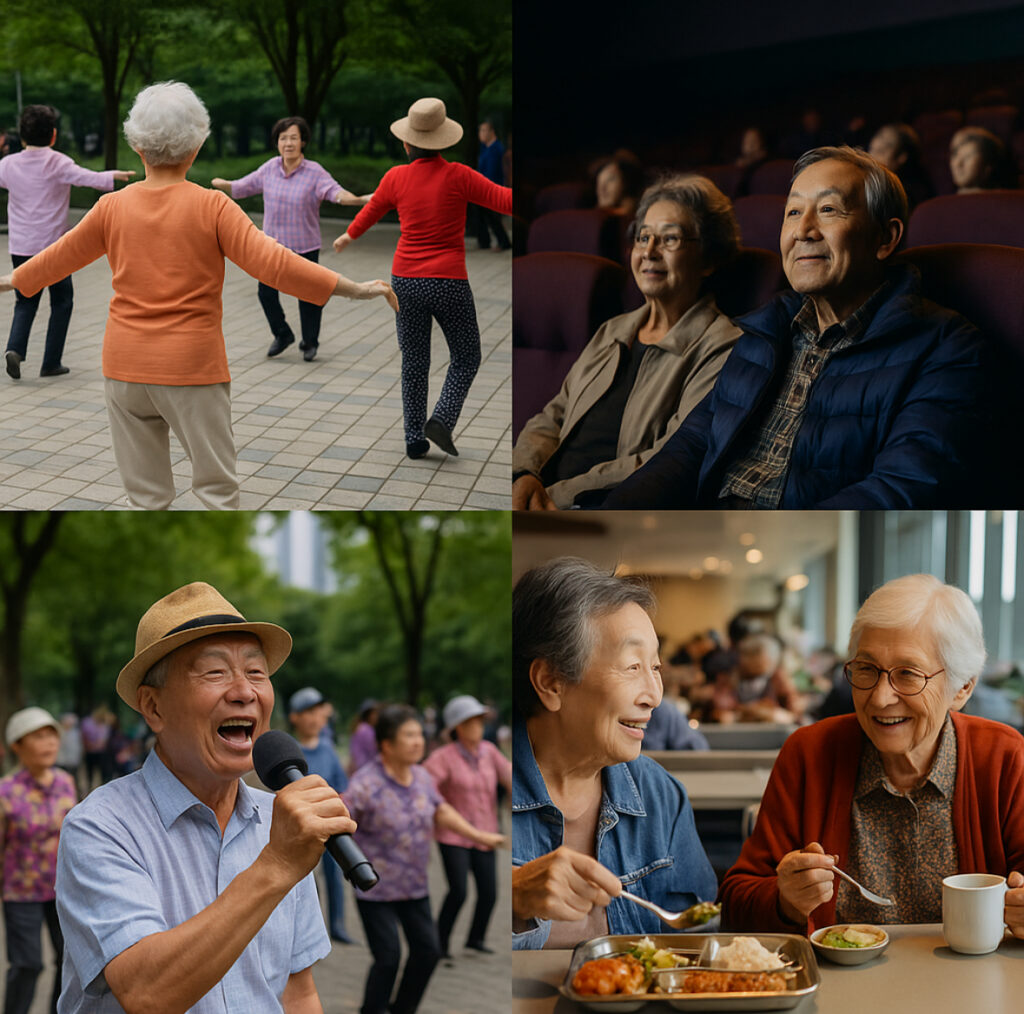
• At Hollywood Classic Theater in Seoul, many seniors come not just to watch old movies, but to remember. They rewatch classics from their youth, replay old soundtracks in their heads, and keep their minds connected to memory, story, and culture.
• In Taipei, seniors join singing groups, karaoke circles, and even museum volunteer programs (yes, they have to pass a test to qualify — and they love it).
⸻
🤝 2. Social Connection – No One Thrives Alone
• Loneliness isn’t just unpleasant — it’s dangerous. Social isolation is linked to depression, faster physical decline, and even premature death.
• A thriving social life gives seniors emotional support, motivation, and a reason to show up.
Real-world example:
• The Seoul theater is more than a cinema — it’s a social hub. People come alone, yes, but they come together — talking, dozing off, sharing a routine.
• In Taipei, mornings are filled with seniors dancing, stretching, or singing in the parks. They later regroup in malls, IKEA cafés (thanks to unlimited refills), and local markets — not for shopping, but for togetherness.
⸻
🎯 3. Purpose – A Reason to Wake Up
• Retirement often strips people of their roles and identity. A sense of purpose — however small — can radically improve mental health and even increase lifespan.
• Purpose might come from caring for others, helping the community, learning new things, or simply having daily rituals.
Real-world example:
• Seoul’s Mr. Kim, an 81-year-old retired foreman, goes to the movie theater two or three times a week. It’s part of his daily rhythm, like checking his step count or chatting with the ticket checker.
• Taipei seniors often volunteer at museums, attend cultural events, or simply follow a self-made schedule of park visits and shared meals. That structure becomes their purpose.
⸻
🧘 4. Psychological Resilience – The Inner Armor
• Aging comes with losses: of loved ones, roles, health, and sometimes independence.
• Resilient seniors don’t avoid grief — they adapt to it. They find joy in small things and keep going.
Real-world example:
• Many of Seoul’s theater regulars have experienced deep solitude, but they continue to show up. Some even nap through half the film and return again the next day.
• In rural Taiwan, seniors who live alone find comfort in community lunch kitchens, where for around $2, they receive a hot meal and human contact — a simple but powerful buffer against isolation.
⸻
👨⚖️ 5. Autonomy – Having Control Over One’s Life
• Even minor decisions — when to eat, where to sit, what to do today — matter deeply.
• Autonomy reinforces dignity and confidence.
Real-world example:
• At the Seoul theater, seniors pay their own tiny ticket fee, choose which films to watch, and stay (or leave) as they like. That control, however small, is sacred.
• In Taipei’s parks, seniors create their own groups. No one tells them when or how to move — they run their own show.
⸻
🌟 6. Dignity and Respect – Aging With Grace
• Older adults want to feel valued, not invisible. Respect and inclusion are essential to mental health.
• Societies that treat seniors as cultural assets — not as burdens — have healthier, happier older populations.
Real-world example:
• The theater owner in Seoul, Ms. Kim, rebuilt the cinema not for profit but to create a dignified space for aging citizens — one where they can be cultural participants, not forgotten relics.
• In Taipei, the sheer presence of seniors in public life — dancing in parks, chatting in IKEA, joining group lunches — reflects a culture that hasn’t hidden its elders away.
⸻
🧾 Conclusion: What Can We Learn?
If aging is a universal experience, then the quality of that experience is a social choice. What Seoul and Taipei show us is that:
• Aging well is not about luxury — it’s about infrastructure, creativity, and respect.
• A movie theater can be a mental health center. A park can be a stage for social connection. A $2 lunch box can be a powerful form of eldercare.
• Seniors don’t need much: a safe place to gather, something to look forward to, and a society that sees them.
⸻
✅ TL;DR – 6 Keys to Aging Well (That Have Nothing to Do With Exercise)
1. Keep your brain busy – Learn, remember, think.
2. Stay socially connected – Even small talk counts.
3. Have a purpose – Rituals and routines matter.
4. Be emotionally flexible – Grieve and grow.
5. Make your own choices – Control = dignity.
6. Feel respected – Aging is not disappearing.
So if you’re lucky enough to grow old someday, remember: you might just want a soft drink, a classic film, and someone to sit beside.