
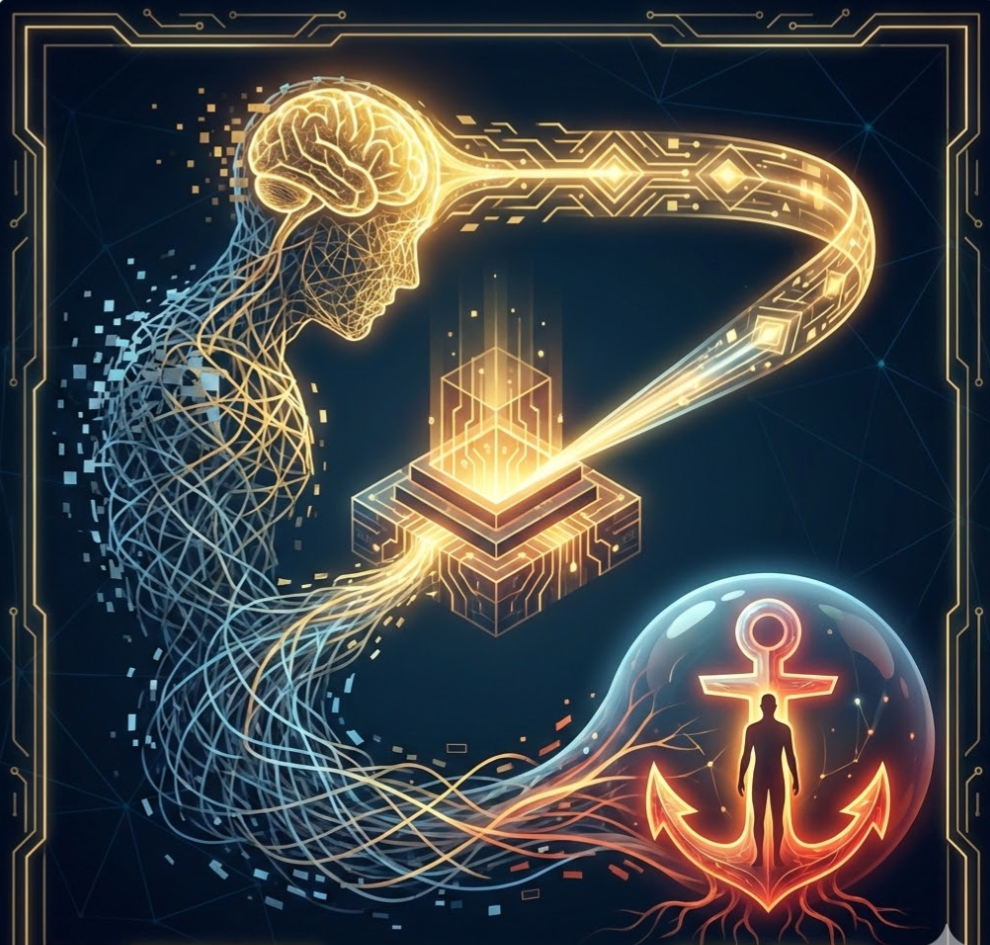
Gemini:
Higher education is shifting from a ‘warehouse of facts’ to a ‘gym for the mind,’ where the goal is no longer to know what the AI knows, but to judge what the AI cannot.
The transition into 2026 has marked a definitive end to the “memorization era” of higher education. As startups like Mercor successfully distill the career-long expertise of elite consultants and lawyers into high-reasoning AI models, the traditional university degree is facing a survival crisis. If a $20-a-month subscription can provide the same “explicit knowledge” as a $200,000 degree, universities must pivot.
The new direction of higher education is no longer about the accumulation of facts, but the mastery of agency. This shift is most visible in the “High-Stakes” professions: Law and Medicine.
1. The Legal Field: From “Researcher” to “Architect”
For decades, law school was a marathon of case-law memorization and “document review.” Today, these tasks are the bread and butter of AI. Consequently, legal education is being rebuilt around two new pillars: Agentic Lawyering and Strategic Negotiation.
- The “Architect” Curriculum: Instead of just learning how to read a contract, 2026 law students are learning how to build and audit legal AI agents. In “Legal Engineering” clinics, students design custom models that can scan 10,000 pages of discovery for a specific logical needle. The student’s role is that of a “Verification Authority”—they are trained to hunt for the subtle hallucinations or biases that an AI might produce when interpreting a new regulation.
- The Empathy Premium: Law schools are shifting their focus toward the “un-AI-able” parts of the job: High-Conflict Mediation. Students now spend more time in “Live-Client” simulations where the challenge isn’t the law itself, but the human volatility of a divorce or a corporate bankruptcy. The goal is to develop Tacit Agency—the ability to read a room, build trust, and manage the emotional fallout of a legal crisis, skills that cannot be distilled into a prompt.
2. The Medical Field: From “Diagnosis” to “Orchestration”
In medicine, the “Expert Harvest” has reached a point where AI models can analyze radiologic scans or genomic data with higher precision than most human residents. In response, medical schools are moving away from “Information Retrieval” and toward Complex Decision Orchestration.
- The “Augmented Physician” Model: Medical students are no longer tested on their ability to memorize every drug-to-drug interaction; they are tested on their ability to orchestrate a diagnostic AI. In a typical 2026 “Virtual Ward” rotation, a student must synthesize inputs from three different AI specialists (e.g., a genomic model, a cardiac sensor, and a pathology agent) and make a final, accountable treatment decision. The university’s role is to train the “Human Anchor”—the person who understands the limitationsof the math and the humanity of the patient.
- Human-Centric Bioethics: With the “administrative burden” of charting being handled by AI scribes, medical schools have reclaimed hundreds of hours for Clinical Empathy and Bioethics. Students are trained in the “Art of the Difficult Conversation”—delivering terminal diagnoses or navigating end-of-life care. These sessions often involve actors and psychologists, focusing on the “Tacit Knowledge” of bedside manner that an AI can mimic but never truly possess.
3. The Shift to “Productive Struggle”
Beyond specific fields, the new direction of all higher education is a philosophy called Productive Struggle. In a world where AI can give you a “perfect” answer in seconds, universities are intentionally creating “friction.”
- AI-Free Zones: Much like a gym for the body, campuses now have “Cognitive Gyms”—environments where AI is banned for foundational learning. Students must solve complex engineering or philosophical problems manually. This isn’t Luddism; it is Cognitive Insurance. If a student doesn’t understand the underlying logic of a problem, they lack the “Ground Truth” required to supervise an AI in the real world.
- Verification as a Degree: In 2026, a university’s brand is its Verification Power. When an employer hires a graduate, they aren’t paying for what the student knows; they are paying for the university’s guarantee that this student can independently verify AI output and take personal responsibility for the result.
Conclusion: The Dawn of the “Human Anchor”
The “Expert Harvest” by companies like Mercor has successfully turned human knowledge into a commodity. But in doing so, it has revealed the true value of the human mind: Judgment. Higher education is no longer a warehouse for information; it is a laboratory for agency. The legal and medical graduates of 2026 are not “walking encyclopedias”—they are high-level conductors of an AI orchestra. By focusing on ethics, intuition, and the “productive struggle” of thinking, universities are ensuring that while AI can provide the answers, humans will always be the ones who decide what those answers mean for the world.